
Soil Analysis: A Fundamental Step in Precision Agriculture
Soil analysis is a crucial step before starting any agricultural season, as it helps farmers understand the nature of the soil and determine the nutrients available in it. With this information, farmers can make informed decisions that improve both productivity and crop quality.
Understanding Soil Properties
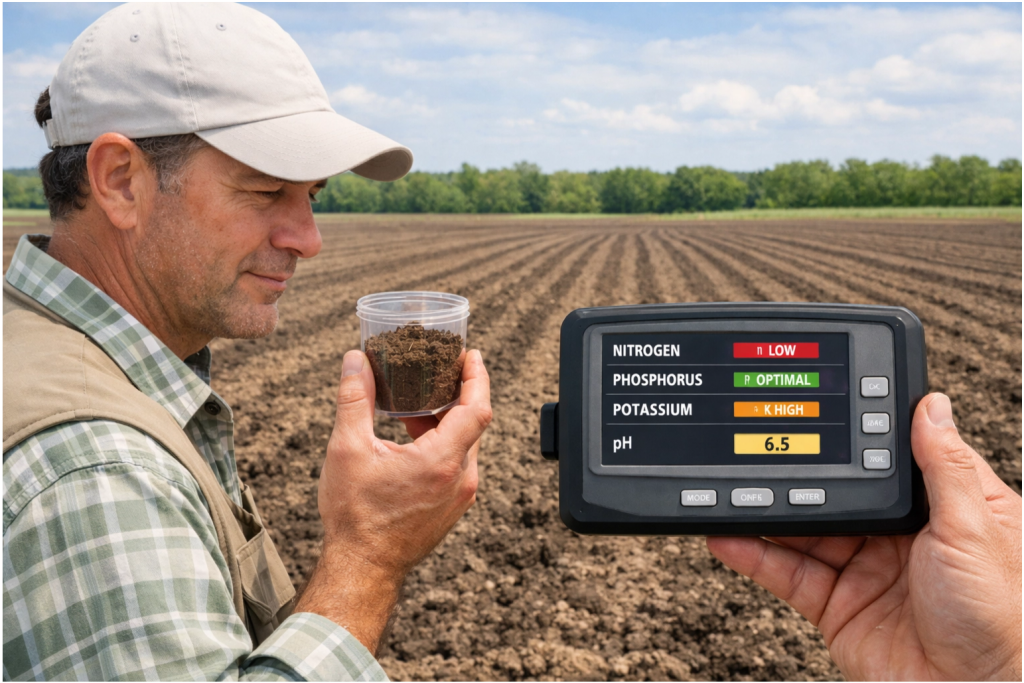
Soil analysis provides important information such as pH levels, organic matter content, and the levels of essential nutrients like nitrogen, phosphorus, and potassium.
Choosing the Right Fertilizers
Soil analysis helps determine the type and amount of fertilizers needed by the plants, preventing overuse of fertilizers and reducing costs.
Improving Crop Quality
When plants receive the right nutrients at the right time, they grow healthily and produce higher-quality yields.
Reducing Agricultural Problems
Soil analysis can reveal issues such as salinity or deficiencies in trace elements, allowing farmers to address them before planting begins.
Scientific Fertilizer Management
Soil analysis aids in creating a balanced fertilization program based on the specific needs of the soil and crops, improving the efficiency of fertilizer use.
Conducting regular soil analysis is an important investment that contributes to sustainable agricultural production and enhances overall farm efficiency.