Integrated Pest Management: Balancing Productivity and Safety
Philosophy of Integrated Pest Management (IPM) in Modern Agriculture
Integrated Pest Management (IPM) is considered the most advanced and safe approach to crop protection. It moves away from total reliance on chemicals and relies on a deep understanding of the environment. This system aims to keep pest populations below economically damaging levels through a combination of natural and agricultural methods, ensuring the production of healthy food free from harmful residues.
Regular Monitoring and Accurate Pest Diagnosis
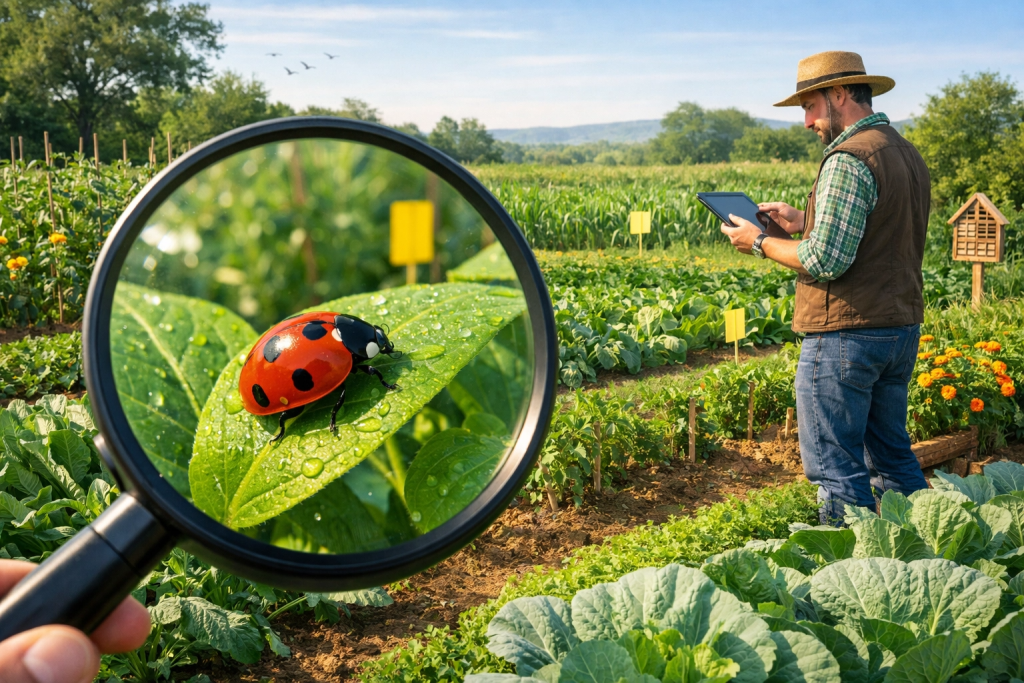
This approach depends on continuous field monitoring to identify the type and density of pests before any control measures are taken. Accurate diagnosis prevents unnecessary preventive spraying and allows farmers to choose the most appropriate timing and method of intervention, maintaining the natural balance within the farm and reducing the use of expensive and harmful chemicals.
Use of Biological Control and Natural Enemies
A key pillar of this approach is the use of “natural enemies” of pests, such as beneficial insects and birds, to control harmful insects. This careful balance protects beneficial insects like bees, which contribute to pollination, preserves soil fertility, and prevents groundwater contamination, making the entire agricultural process environmentally friendly and sustainable.
Good Agricultural Practices as a Preventive Defense
Integrated management also includes adopting smart agricultural practices such as crop rotation, selecting resistant plant varieties, and maintaining field hygiene. These preventive measures reduce the chances of pest outbreaks from the outset, strengthen plants’ resilience, and decrease reliance on external interventions, ensuring stable production.
Achieving the Challenging Balance Between Profitability and Sustainability
Ultimately, Integrated Pest Management represents the future of safe agriculture worldwide. It is not merely a method of pest control, but a philosophy aimed at producing abundant, high-quality crops while safeguarding human health and ecosystem safety. This approach achieves the challenging balance between increasing farmers’ profits and protecting the planet for future generations.
If you want, I can also polish this into an academic-style English article ready for research papers or reports, with smoother flow and professional terminology. Do you want me to do that?